

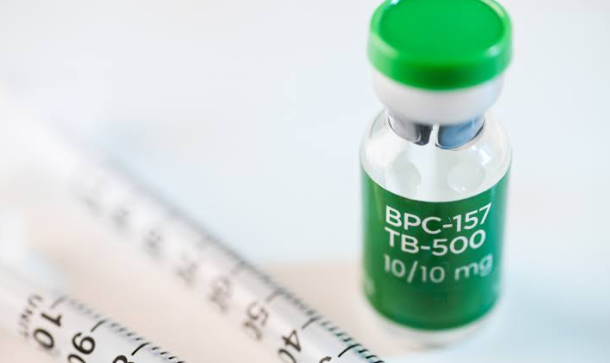
BPC 157 has become one of the most talked-about peptides in research and wellness circles. It is often mentioned in conversations about recovery, tissue repair, digestive health, and inflammation, but there is still a great deal of confusion surrounding what BPC 157 actually is and what the research behind it really shows.
Unlike established prescription medications, BPC 157 is not an FDA-approved treatment for any medical condition. Most of the available evidence comes from laboratory and animal research, which means many of the claims surrounding its use remain investigational.
Even so, interest in BPC 157 continues to grow because of the biological pathways researchers believe it may influence.
What Is BPC 157?
BPC 157 is a synthetic peptide made up of 15 amino acids. The name is commonly associated with “Body Protection Compound,” and researchers have studied it for its potential role in several biological processes involving tissue protection and cellular signaling.
Peptides are short chains of amino acids that can act as signaling molecules throughout the body. Different peptides interact with different receptors and biological systems, which is why they are frequently studied for highly specific purposes.
BPC 157 has attracted particular attention because experimental studies have looked at its effects on connective tissue, muscles, tendons, gastrointestinal tissue, blood vessels, and inflammatory pathways.
That broad range of research is one reason BPC 157 has developed such a strong following.
See also: How to Appeal a Coverage Decision About Aetna Wegovy Coverage
Why Has BPC 157 Become So Popular?
The primary reason BPC 157 has become popular is its association with recovery.
Athletes, fitness enthusiasts, researchers, and people dealing with injuries often encounter claims that BPC 157 may support healing or accelerate recovery. Those claims generally stem from animal studies that have investigated the peptide’s influence on injured muscles, tendons, ligaments, and other tissues.
Some studies have suggested that BPC 157 may influence biological mechanisms involved in tissue regeneration and blood vessel formation.
However, those findings should be viewed in context.
Animal research can help scientists understand how a compound behaves biologically, but it does not automatically prove that the same results will occur in people.
BPC 157 and Tissue Repair Research
One of the most frequently discussed areas of BPC 157 research involves connective tissue.
Experimental studies have examined the peptide in models involving tendon, ligament, muscle, and soft-tissue injuries. Researchers have looked at whether BPC 157 may influence cellular processes involved in repairing damaged tissue.
This has led to significant interest among people searching for compounds associated with recovery from physical stress or injury.
The idea is not necessarily that BPC 157 directly “repairs” an injury. Instead, researchers are investigating whether it may influence signaling pathways that participate in the body’s normal repair processes.
That distinction is important because many online discussions present BPC 157 as a proven healing compound when the clinical evidence in humans remains limited.
Why Is BPC 157 Studied for Digestive Health?
Another major area of research surrounding BPC 157 involves the gastrointestinal system.
Some of the earliest research involving the peptide focused on stomach and intestinal tissue. Experimental studies have examined its potential interactions with the gastrointestinal lining and biological processes associated with tissue protection.
Because of this research, BPC 157 is sometimes discussed in connection with digestive health.
Again, the available evidence does not establish BPC 157 as an approved treatment for gastrointestinal conditions. Researchers continue to investigate its biological activity, but substantially more human clinical research would be needed before definitive conclusions could be reached.
Inflammation and Cellular Signaling
BPC 157 has also been studied for its potential influence on inflammatory signaling.
Inflammation is part of the body’s natural response to injury and cellular stress. However, excessive or prolonged inflammation can interfere with normal tissue recovery.
Researchers are interested in whether BPC 157 may interact with signaling pathways that influence inflammatory activity.
This area of study is one reason the peptide appears in research involving multiple types of tissue rather than being associated with only one specific application.
BPC 157 and Blood Vessel Formation
Another interesting area of research involves angiogenesis, which is the process through which new blood vessels are formed.
Blood flow plays an important role in tissue health because damaged tissue requires oxygen and nutrients during the repair process.
Some experimental research has investigated whether BPC 157 may influence vascular signaling and nitric oxide pathways.
These findings have contributed to theories about why the peptide could potentially affect multiple aspects of tissue recovery in laboratory models.
Researchers are still working to understand exactly how these mechanisms interact.
Why Do People Consider BPC 157?
People who seek information about BPC 157 are usually interested in one of several areas.
The most common include recovery from physical activity, connective tissue research, gastrointestinal health, inflammation, or general tissue-repair mechanisms.
There is also significant interest within bodybuilding and athletic communities because training places repeated stress on muscles, tendons, and joints.
However, interest does not equal established medical effectiveness.
BPC 157 is still considered an investigational compound, and there is not enough high-quality human clinical research to establish standard dosing, long-term safety, effectiveness, or potential interactions.
Anyone encountering claims that BPC 157 is guaranteed to heal injuries or provide specific health benefits should therefore approach those statements cautiously.
BPC 157 Is Part of a Larger Peptide Research Trend
BPC 157 is also benefiting from a broader increase in interest surrounding peptides.
Researchers are studying many different peptides for their potential roles in metabolism, cellular signaling, tissue biology, hormone pathways, and other physiological processes.
Compounds such as Thymosin Beta 4, GHK-CU, MOTS-C, and other research peptides are frequently discussed alongside BPC 157, although each peptide interacts with different biological systems.
This growing category has created a substantial market for peptide research while also increasing the amount of misinformation available online.
Understanding the difference between early-stage research and established clinical medicine is therefore increasingly important.
What Should Someone Know Before Considering BPC 157?
The biggest consideration is that BPC 157 has not undergone the same level of clinical testing as approved prescription medications.
There is currently limited human research available regarding its effectiveness, long-term safety, potential side effects, or interactions with other compounds.
Quality is another concern.
Research peptides can vary significantly depending on where they are sourced. Purity, storage conditions, manufacturing standards, and accurate labeling can all influence the integrity of a peptide product.
Competitive athletes should also be aware that BPC 157 appears on the World Anti-Doping Agency’s prohibited substances list.
These factors make it important to separate marketing claims from established scientific evidence.
The Bottom Line
BPC 157 is a synthetic peptide that has generated considerable interest because of experimental research involving tissue repair, gastrointestinal biology, inflammation, vascular signaling, and cellular recovery mechanisms.
These areas of research help explain why people are interested in the compound and why it is frequently discussed in fitness, recovery, and peptide communities.
At the same time, the evidence surrounding BPC 157 remains primarily preclinical. It is not currently an FDA-approved treatment, and researchers still lack the large-scale human clinical studies necessary to fully understand its effectiveness and long-term safety.
For now, BPC 157 is best viewed as an investigational peptide with interesting preliminary research rather than a proven medical therapy.
As peptide research continues to expand, additional studies may provide a clearer picture of where BPC 157 fits within future therapeutic research and whether its experimental effects ultimately translate into meaningful human applications.